
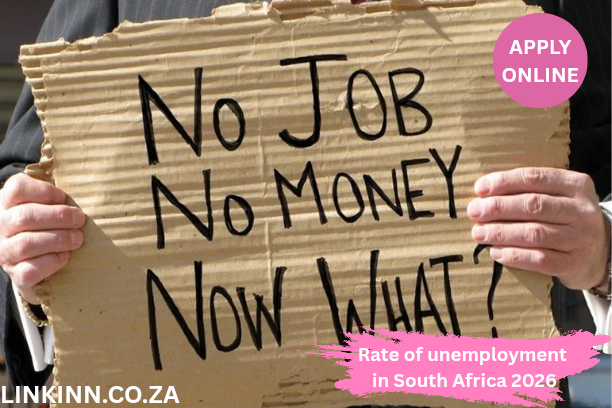
Rate of Unemployment in South Africa in 2026 | Latest Statistics, Causes & Solutions
Rate of Unemployment in South Africa in 2026: Latest Statistics, Causes, Impact, Solutions and Future Outlook
The rate of unemployment in South Africa in 2026 remains one of the most discussed economic issues in the country. Despite ongoing efforts to stimulate economic growth, create jobs, and support entrepreneurship, millions of South Africans continue to search for employment opportunities.
Unemployment affects families, communities, businesses, and the broader economy. It influences poverty levels, consumer spending, social stability, education outcomes, and economic growth. For many young people entering the labour market, finding meaningful work remains a major challenge.
The latest labour market data released in 2026 paints a concerning picture. While certain industries continue to create jobs, overall employment growth has not been sufficient to absorb the growing number of job seekers entering the labour force every year. According to the latest Quarterly Labour Force Survey (QLFS), South Africa’s official unemployment rate increased to 32.7% during the first quarter of 2026, making it one of the highest unemployment rates among major economies worldwide. (Government of South Africa)
This comprehensive guide explores the rate of unemployment in South Africa in 2026, including the latest statistics, contributing factors, provincial differences, youth unemployment trends, economic impact, government interventions, and practical solutions for job seekers.
Latest Unemployment Statistics in South Africa in 2026
Rate of Unemployment in South Africa in 2026
According to the latest Quarterly Labour Force Survey published by Statistics South Africa and acknowledged by the Department of Employment and Labour, the official unemployment rate rose from 31.4% in the fourth quarter of 2025 to 32.7% in the first quarter of 2026. (Government of South Africa)
The data shows:
- Official unemployment rate: 32.7%
- Unemployed persons: 8.1 million
- Employed persons: 16.8 million
- Jobs lost during Q1 2026: 345,000
- Increase in unemployed persons: 301,000
- Expanded unemployment rate: 43.7% (SAnews)
These figures highlight the ongoing difficulties facing the South African labour market.
Official Source
For the latest labour market reports, visit:
Statistics South Africa (Stats SA)
What Does the Unemployment Rate Mean?
Rate of Unemployment in South Africa in 2026
The unemployment rate measures the percentage of people in the labour force who are actively seeking work but cannot find employment.
South Africa generally reports three important labour market indicators:
Official Unemployment Rate
Includes individuals actively searching for work.
Expanded Unemployment Rate
Includes discouraged work-seekers who have stopped actively searching because they believe no opportunities exist.
Youth Unemployment Rate
Measures unemployment among younger individuals, usually aged 15 to 34.
These indicators help policymakers understand labour market conditions and develop employment strategies.
Youth Unemployment in South Africa in 2026
One of the most concerning aspects of the rate of unemployment in South Africa in 2026 is the impact on young people.
Recent labour market data shows that youth remain the most vulnerable group in the labour market. The number of unemployed youth increased significantly during the first quarter of 2026. Statistics South Africa reported approximately 4.7 million unemployed young people, while youth employment declined during the same period. (SAnews)
Among specific age groups:
- Ages 15–24 unemployment rate: approximately 60.9%
- Ages 25–34 unemployment rate: approximately 40.6% (EWN)
These figures demonstrate the challenges facing graduates, matriculants, and first-time job seekers.
Why Is Unemployment So High in South Africa?
Several factors contribute to the unemployment crisis.
1. Slow Economic Growth
One of the biggest causes is slow economic growth.
South Africa has experienced years of relatively weak economic expansion, limiting businesses’ ability to hire additional workers. Economic analysts continue to warn that low growth remains a significant barrier to job creation. (Reuters)
2. Skills Mismatch
Many employers struggle to find candidates with the specific skills required for modern workplaces.
Industries increasingly demand:
- Digital skills
- Technical qualifications
- Data analysis
- Software development
- Project management
Meanwhile, many job seekers lack access to relevant training opportunities.
3. Limited Work Experience
Many vacancies require prior experience.
This creates a challenge for:
- School leavers
- University graduates
- TVET graduates
- First-time job seekers
Without workplace exposure, many candidates struggle to secure their first employment opportunity.
4. Technological Change
Automation and digital transformation are changing labour markets globally.
While technology creates new jobs, it also reduces demand for some routine roles.
Growing fields include:
- Artificial Intelligence
- Cybersecurity
- Software Development
- Cloud Computing
- Renewable Energy Technology
5. Population Growth
Every year, hundreds of thousands of young people enter the labour market.
Job creation often struggles to keep pace with the number of new entrants.
Provincial Unemployment Trends
Unemployment rates vary considerably across South Africa.
Some provinces generally experience higher unemployment levels than others.
Provinces Often Facing Greater Challenges
- Eastern Cape
- Limpopo
- Free State
- North West
Provinces with Stronger Labour Markets
- Gauteng
- Western Cape
The Western Cape continues to record one of the lowest unemployment rates in South Africa, with recent figures significantly below the national average. (Government of South Africa)
Industries Creating Jobs in 2026
Despite the challenges, some industries continue creating employment opportunities.
Information Technology
Technology remains one of the fastest-growing sectors.
Opportunities include:
- Software Developers
- Data Analysts
- Network Engineers
- Cybersecurity Specialists
Healthcare
Healthcare continues generating demand for:
- Nurses
- Caregivers
- Healthcare Administrators
- Medical Technicians
Renewable Energy
South Africa’s transition toward cleaner energy sources is creating employment opportunities in:
- Solar energy
- Wind energy
- Electrical installations
- Energy project management
Logistics and Supply Chain
The growth of e-commerce continues supporting employment in:
- Warehousing
- Transportation
- Distribution
- Supply Chain Management
Financial Services
Banks, insurers, and fintech companies continue recruiting qualified professionals.
For information about careers in banking and finance:
Economic Impact of High Unemployment
The rate of unemployment in South Africa in 2026 has wide-ranging economic consequences.
Reduced Consumer Spending
Unemployed individuals typically have lower purchasing power.
This affects:
- Retail sales
- Property markets
- Tourism
- Small businesses
Increased Poverty
Households without stable income often face:
- Food insecurity
- Housing challenges
- Educational barriers
Lower Tax Revenue
Fewer employed individuals result in reduced income tax collections.
This can affect public service delivery and infrastructure investment.
Social Challenges
High unemployment may contribute to:
- Crime
- Inequality
- Social unrest
- Economic exclusion
Government Responses to Unemployment
The South African government continues implementing programmes designed to address unemployment.
These include:
- Skills development programmes
- Public employment initiatives
- Entrepreneurship support
- Learnership funding
- Internship programmes
Useful resources:
Department of Higher Education and Training (DHET)
Quality Council for Trades and Occupations (QCTO)
How Learnerships Help Reduce Unemployment
Learnerships remain one of the most effective tools for improving employability.
Benefits include:
- Workplace experience
- Nationally recognised qualifications
- Skills development
- Professional networking
Many companies use learnerships as recruitment pipelines for future employees.
How Internships Improve Employment Prospects
Internships provide:
- Practical workplace exposure
- Industry experience
- Professional references
- Skills development
Many graduates secure permanent employment after completing internships.
What Job Seekers Can Do in 2026
Develop Digital Skills
Technology skills remain highly valuable.
Consider learning:
- Microsoft Excel
- Data Analytics
- Coding
- Digital Marketing
- Artificial Intelligence Fundamentals
Improve Your CV
A professional CV can significantly improve interview opportunities.
Focus on:
- Skills
- Education
- Certifications
- Volunteer experience
- Achievements
Build Professional Networks
Networking remains one of the most effective job-search strategies.
Platforms such as:
can help professionals connect with employers and recruiters.
Consider Learnerships and Internships
Many successful professionals started their careers through structured workplace programmes.
Explore Remote Work
Remote work opportunities continue expanding globally.
Popular platforms include:
International Comparison
Compared with countries such as the United States, United Kingdom, and Canada, South Africa’s unemployment rate remains substantially higher.
This is one reason why economists, investors, and global organizations continue monitoring South Africa’s labour market closely.
The country’s unemployment challenges are often linked to:
- Structural economic issues
- Skills shortages
- Historical inequalities
- Slow economic growth
Future Outlook for Employment in South Africa
Although unemployment remains high, several positive developments could support future job creation.
These include:
- Growth in renewable energy
- Expansion of technology industries
- Increased digital entrepreneurship
- Growth of remote work
- Skills development initiatives
Business confidence has also shown signs of improvement in some sectors despite broader economic challenges. (Reuters)
Frequently Asked Questions
What is the unemployment rate in South Africa in 2026?
According to the latest Quarterly Labour Force Survey, South Africa’s official unemployment rate stood at 32.7% in the first quarter of 2026. (Government of South Africa)
What is the expanded unemployment rate?
The expanded unemployment rate was reported at 43.7%, which includes discouraged work-seekers. (EWN)
Why is youth unemployment so high?
Major factors include limited work experience, skills mismatches, economic challenges, and intense competition for available positions. (SAnews)
Which sectors are hiring in 2026?
Technology, healthcare, logistics, renewable energy, and financial services continue creating opportunities.
Can learnerships help me get a job?
Yes. Learnerships provide practical experience and recognised qualifications that improve employability.
Final Thoughts
The rate of unemployment in South Africa in 2026 remains one of the country’s most significant economic and social challenges. With the official unemployment rate reaching 32.7%, millions of South Africans continue searching for stable employment opportunities. (Government of South Africa)
Despite these challenges, opportunities continue to emerge in technology, healthcare, renewable energy, logistics, and financial services. Individuals who focus on skills development, workplace experience, networking, and continuous learning will be better positioned to succeed in an evolving labour market.
While reducing unemployment will require sustained collaboration between government, businesses, educational institutions, and communities, investment in skills, innovation, and entrepreneurship offers a pathway toward a more inclusive and prosperous future for South Africa.