
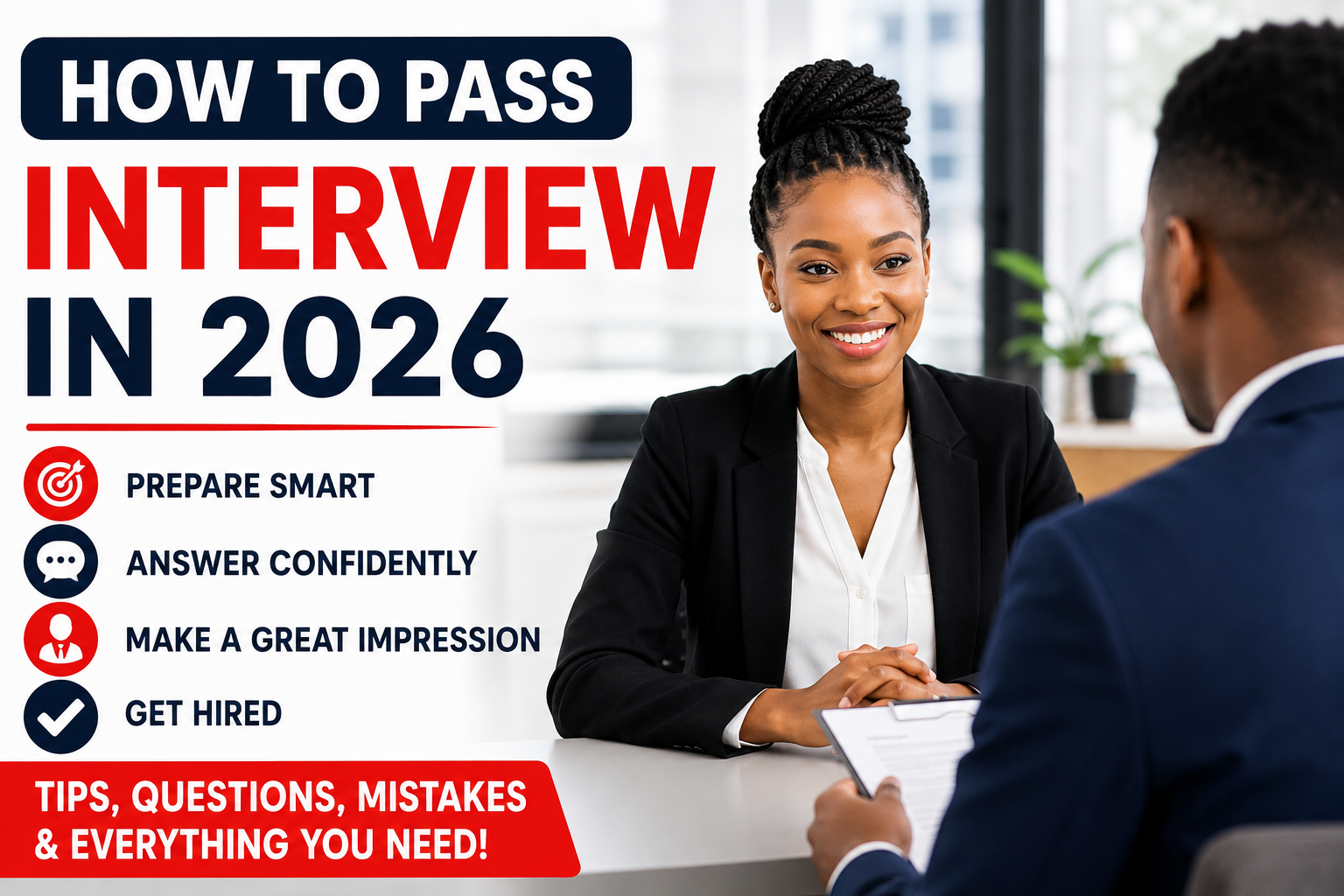
How to Pass a Job Interview in 2026
How to Pass a Job Interview in 2026
How to Pass a Job Interview in 2026
Receiving an invitation to attend a job interview is an exciting achievement. It means your CV and application impressed the employer enough for them to want to meet you. However, getting the interview is only the first step. The real challenge is convincing the employer that you are the best candidate for the position.
Many South African job seekers lose opportunities because they attend interviews without proper preparation. Employers are looking for more than qualifications—they want confident, professional, and motivated people who can contribute to their organisations.
Whether you are applying for a learnership, internship, graduate programme, apprenticeship, government vacancy, or permanent job, this guide will help you prepare and perform well during your interview.
Why Job Interviews Are Important
How to Pass a Job Interview in 2026
Employers use interviews to determine whether you are the right fit for their organisation.
During the interview they evaluate:
- Your communication skills
- Your confidence
- Your professionalism
- Your attitude
- Your problem-solving ability
- Your willingness to learn
- Your personality
- Your knowledge about the company
A successful interview shows that you are prepared, reliable, and genuinely interested in the opportunity.
1. Research the Company
How to Pass a Job Interview in 2026
Never attend an interview without learning about the employer.
Find out:
- What the company does
- Its products or services
- Company values
- Recent achievements
- Industry
- Company culture
Visit the company’s official website and social media pages.
Knowing these details helps you answer questions with confidence and demonstrates genuine interest.
2. Read the Job Advertisement Again
How to Pass a Job Interview in 2026
Many applicants forget what they applied for.
Read the vacancy carefully and understand:
- Job responsibilities
- Required qualifications
- Required skills
- Experience needed
- Competencies
Prepare examples showing how your skills match the position.
3. Practice Common Interview Questions
How to Pass a Job Interview in 2026
Some of the most common interview questions include:
- Tell us about yourself.
- Why do you want this job?
- Why should we hire you?
- What are your strengths?
- What is your greatest weakness?
- Tell us about a challenge you have overcome.
- Where do you see yourself in five years?
- Why do you want to work for our company?
Practice answering these questions naturally rather than memorising responses.
4. Dress Professionally
How to Pass a Job Interview in 2026
Your appearance creates the first impression.
Wear:
- Clean clothing
- Ironed shirt or blouse
- Smart trousers or skirt
- Closed shoes
- Neat hairstyle
Avoid:
- Torn jeans
- Slippers
- Excessive jewellery
- Strong perfume
Professional clothing shows respect for the employer.
5. Arrive Early
Aim to arrive 15–20 minutes before your interview.
For online interviews:
- Test your internet connection.
- Charge your laptop or phone.
- Check your microphone.
- Test your camera.
- Choose a quiet location.
Being punctual demonstrates professionalism and reliability.
6. Bring Your Documents
Always carry:
- Updated CV
- Certified ID copy
- Qualification certificates
- Academic transcript
- Reference letters
- Notebook and pen
Organising your documents makes a positive impression.
7. Speak Clearly and Confidently
During the interview:
- Maintain eye contact.
- Smile naturally.
- Speak clearly.
- Listen carefully.
- Avoid interrupting.
- Stay calm.
Confidence comes from preparation.
8. Show Enthusiasm
Employers appreciate candidates who demonstrate:
- Positive attitude
- Willingness to learn
- Respect
- Honesty
- Professionalism
- Passion for the role
Even if you lack experience, enthusiasm can make a difference.
9. Use Real Examples
Instead of simply saying:
“I am hardworking.”
Explain:
“During my final year at college, I completed three group projects before the deadline while helping other team members. This taught me time management and teamwork.”
Real examples make your answers stronger.
10. Ask Questions
Towards the end of the interview, you will often be asked if you have any questions.
Good questions include:
- What does success look like in this role?
- What training opportunities are available?
- What are the next steps in the recruitment process?
- What does a typical working day look like?
Avoid asking about salary immediately unless the employer raises the topic.
Common Interview Mistakes
Avoid these mistakes:
- Arriving late
- Speaking negatively about previous employers
- Using your cellphone
- Interrupting the interviewer
- Providing dishonest information
- Dressing inappropriately
- Failing to research the company
- Forgetting to thank the interviewer
After the Interview
After the interview:
- Thank the interviewer.
- Check your email regularly.
- Continue applying for other opportunities.
- Reflect on areas where you can improve.
Remember that rejection is part of the job-search journey.
Useful Resources for Interview Preparation
These trusted resources can help you prepare for interviews and improve your employability.
Google Interview Warmup
Practice answering interview questions using Google’s free AI-powered interview preparation tool.
https://grow.google/certificates/interview-warmup
Build a professional profile, network with employers, and search for jobs.
National Career Advice Portal (NCAP)
Free career guidance and interview preparation resources.
https://ncap.careerhelp.org.za
SAYouth.mobi
Access verified learnerships, internships, and job opportunities.
Department of Employment and Labour
Official employment services and labour information.
Public Service Vacancy Circular (DPSA)
Browse official South African government vacancies.
Linkinn South Africa
Find the latest:
- Learnerships
- Graduate Programmes
- Internships
- Apprenticeships
- Government Jobs
- Career Advice
Related Articles
Continue improving your job-search skills with these guides:
- How to Write a Professional CV in 2026
- How to Write a Winning Cover Letter
- Top 20 Interview Questions and Best Answers
- How to Answer “Tell Me About Yourself”
- Common Interview Mistakes to Avoid
- Best Free Online Courses for Job Seekers
- Documents Required for Job Applications
- How to Prepare for Online Interviews
- How to Follow Up After a Job Interview
- Best Job Search Websites in South Africa
Frequently Asked Questions (FAQ)
How can I prepare for a job interview?
Research the company, review the job description, practise common interview questions, prepare your documents, and dress professionally.
How early should I arrive?
Arrive at least 15–20 minutes before your scheduled interview.
What documents should I bring?
Bring your CV, certified ID copy, qualification certificates, academic transcript, and any supporting documents requested by the employer.
What if I don’t know the answer to a question?
Stay honest. Explain how you would approach the problem or your willingness to learn rather than guessing.
Is work experience necessary to pass an interview?
No. Employers also value your attitude, communication skills, willingness to learn, and potential.
Can I ask questions during the interview?
Yes. Asking thoughtful questions shows interest and professionalism.
Should I send a thank-you email?
If possible, yes. A polite thank-you message reinforces your professionalism and appreciation for the opportunity.
How can I improve my confidence?
Preparation is the key. Practise your answers, research the employer, and attend interviews whenever possible to gain experience.
Final Thoughts
Passing a job interview in 2026 is about preparation, confidence, and professionalism. Every interview is an opportunity to learn, improve, and move one step closer to your career goals. Even if you are unsuccessful, use the experience to strengthen your interview skills for the next opportunity.
Research the employer, understand the role, practise your answers, arrive on time, communicate clearly, and maintain a positive attitude. These simple steps can significantly improve your chances of success.
For more interview tips, CV writing guides, learnerships, internships, graduate programmes, bursaries, and job opportunities across South Africa, visit www.linkinn.co.za regularly.
Disclaimer: This article is for educational and informational purposes only. Following these interview tips does not guarantee employment. Recruitment decisions are made solely by employers based on their requirements and selection processes.